Your internal IT team knows the business better than anyone. They understand the systems employees rely on, the unusual software requirements, the recurring support issues, and the technology decisions that have accumulated over the years.
The problem often starts when that knowledge is no longer enough to cover everything the business expects from IT.
Perhaps the company has grown faster than the IT department. Maybe security responsibilities have expanded. A major cloud project is competing with everyday support requests. Or the IT manager spends so much time troubleshooting routine issues that long-term technology planning keeps getting pushed aside.
At that point, many businesses assume they face a simple choice: hire more internal staff or outsource IT entirely.
There is another option.
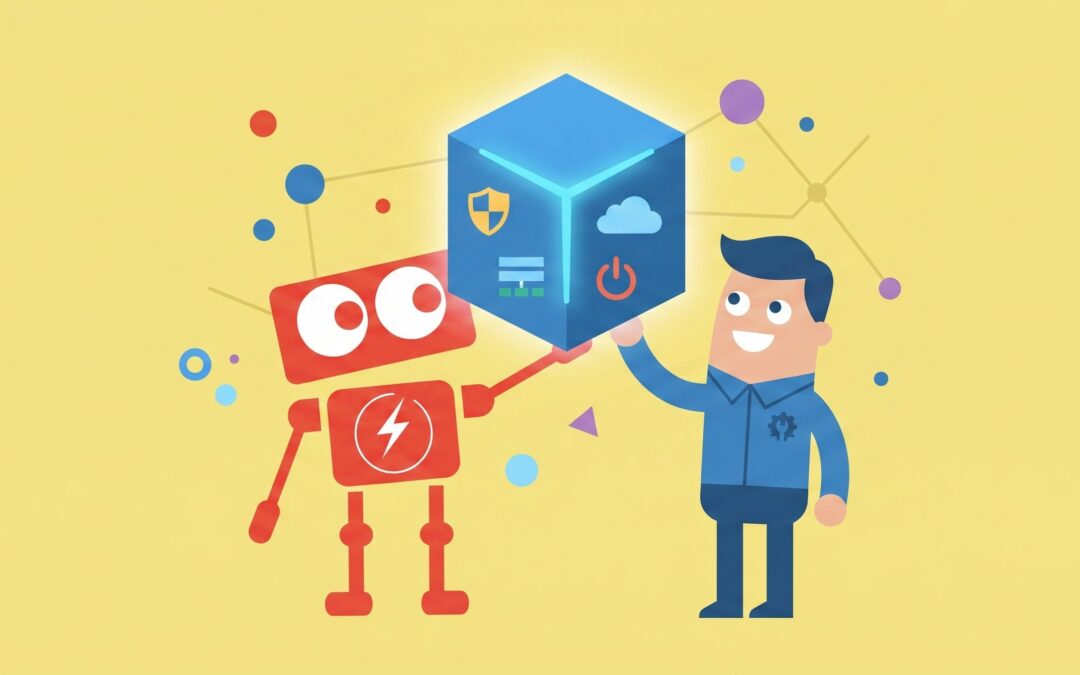
Co-managed IT allows an internal IT team to keep ownership of technology while bringing in outside expertise, tools, or capacity where additional support is useful. For growing small and mid-sized businesses, it can be a practical way to strengthen IT without replacing the people who already understand the organization.
When the Internal IT Team Is Running Out of Capacity
One of the clearest reasons to consider co-managed IT is workload.
An IT department can be technically capable and still be overwhelmed. A business with 40 computers may have relatively straightforward technology needs. By the time that organization reaches 80 or 100 computers, the environment can become considerably more complex.
More employees create more accounts, devices, applications, access requests, security alerts, software updates, and support tickets.
The challenge is not necessarily that the IT team lacks knowledge. It may simply lack time.
Consider a company with one experienced IT manager supporting 75 employees. That person might be responsible for employee support, network administration, cybersecurity, backups, Microsoft 365, vendor relationships, new employee setup, and technology planning.
Every individual responsibility may be manageable. Together, they can consume nearly every available hour.
Co-managed IT can provide additional capacity for specific functions, such as monitoring systems, managing updates, handling routine support, maintaining backups, or assisting with security operations. The internal IT manager remains involved but gains room to focus on projects and decisions that require deeper knowledge of the business.
A Useful Question to Ask
Is your IT team spending most of its time improving technology, or simply keeping up with it?
If important projects repeatedly get delayed because everyday support always comes first, additional IT capacity may be worth evaluating.
When Specialized IT Knowledge Is Becoming More Important
Technology responsibilities have expanded far beyond maintaining computers and resetting passwords.
Modern businesses must manage cybersecurity, identity and access controls, cloud platforms, data protection, compliance requirements, software integrations, remote work, and increasingly complex vendor environments.
An internal IT professional may be excellent at supporting the company’s systems without being a specialist in every one of those areas.
That is normal.
For example, an IT manager may comfortably administer Microsoft 365 but have limited experience evaluating advanced email security controls. Another may understand networking extremely well but rarely design disaster recovery plans. Someone responsible for general IT support may not spend enough time analyzing security alerts to recognize subtle patterns.
Hiring a separate employee for every specialty is rarely practical for an SMB.
A co-managed IT model allows the business to add specialized knowledge when needed while keeping the internal team at the center of technology operations.
The goal is not to replace internal expertise. It is to expand the range of expertise available to the organization.
When the Business Is Growing Faster Than Its IT Structure
Growth tends to expose weaknesses in technology gradually.
A process that worked for 35 employees may become frustrating at 70. A network designed years ago may struggle with additional cloud applications and devices. Employee onboarding may become inconsistent. Permissions may accumulate without regular review.
None of these issues necessarily indicate poor IT management. They often reflect a business that has changed faster than its technology processes.
Imagine a professional services company opening a second office while continuing to hire remote employees. The internal IT team now has to think about secure remote access, network connectivity, device deployment, data protection, collaboration tools, and support across multiple locations.
That is significantly different from supporting everyone in one building.
Co-managed IT can help internal teams evaluate whether existing processes will scale. Outside specialists may assist with infrastructure planning, security assessments, documentation, cloud migrations, or major technology projects while the internal team continues managing daily operations.
This can be particularly useful during periods of rapid hiring, acquisitions, office expansions, or major software changes.
When IT Depends Too Heavily on One Person
Small businesses often rely heavily on one highly capable IT professional.
That person may know every administrator password, vendor relationship, server configuration, network setting, and historical workaround.
Their knowledge is valuable, but it can also create operational risk if too much information exists only in one person’s memory.
What happens when that employee takes vacation? Who responds if a major system fails while they are unavailable? Could another person quickly understand how critical systems are configured?
Co-managed IT can introduce additional coverage without removing the internal IT leader from their role.
External support can also encourage better documentation of networks, systems, vendors, administrative access, recovery procedures, and technology processes.
Documentation may not seem especially important during a normal workday. Its value becomes much clearer when someone else needs to troubleshoot a system quickly.
Reducing dependence on a single person also makes vacations, sick days, and staffing changes easier to manage.
How to Know Whether Co-Managed IT Fits Your Business
There is no specific employee count that automatically means a company needs co-managed IT.
The better question is whether the current IT structure matches the complexity of the business.
A business may be ready to evaluate co-managed IT when internal staff consistently struggle to keep up with support requests, technology projects are regularly delayed, security responsibilities are becoming difficult to manage, specialized expertise is needed, documentation is incomplete, or the company depends heavily on one IT employee.
The best arrangements also have clearly defined responsibilities.
For example, an internal IT team might handle employee support and business applications while an outside team manages cybersecurity monitoring, backups, patching, and infrastructure maintenance.
Another company might keep nearly all daily IT responsibilities internally but use outside specialists for major projects and strategic planning.
Co-managed IT works best when both sides understand who owns each responsibility.
Co-Managed IT Is About Extending Capability
Choosing co-managed IT does not mean an internal IT department has failed.
In many cases, the opposite is true. The business has simply reached a level of complexity where asking one person or a small team to manage every technology responsibility is no longer realistic.
The right question is not whether IT should be internal or external.
It is whether the people responsible for technology have enough time, expertise, tools, and backup to support the business effectively.
For some organizations, the existing internal team will remain completely sufficient. For others, adding outside capacity can help the IT department operate with greater consistency and focus.
If your business is evaluating its IT structure, start by reviewing where your internal team spends its time, which responsibilities depend on specialized knowledge, and which projects repeatedly remain unfinished. That assessment can help clarify whether co-managed IT would strengthen the technology resources you already have.